

“Everyone against KRIK”
By Veran Matić, President of ANEM
The fact that this is nevertheless a lawsuit with SLAPP elements, a lawsuit aimed at preventing this internationally award-winning investigative journalism team and newsroom from continuing its work, is best demonstrated by the fact that the Djordjević couple initially sued editor-in-chief Stevan Dojčinović and journalist Bojana Pavlović. They filed criminal charges against them, seeking prison sentences of 10 months each, as well as a two-year ban on practicing journalism — the most severe such demand in Europe in recent years.
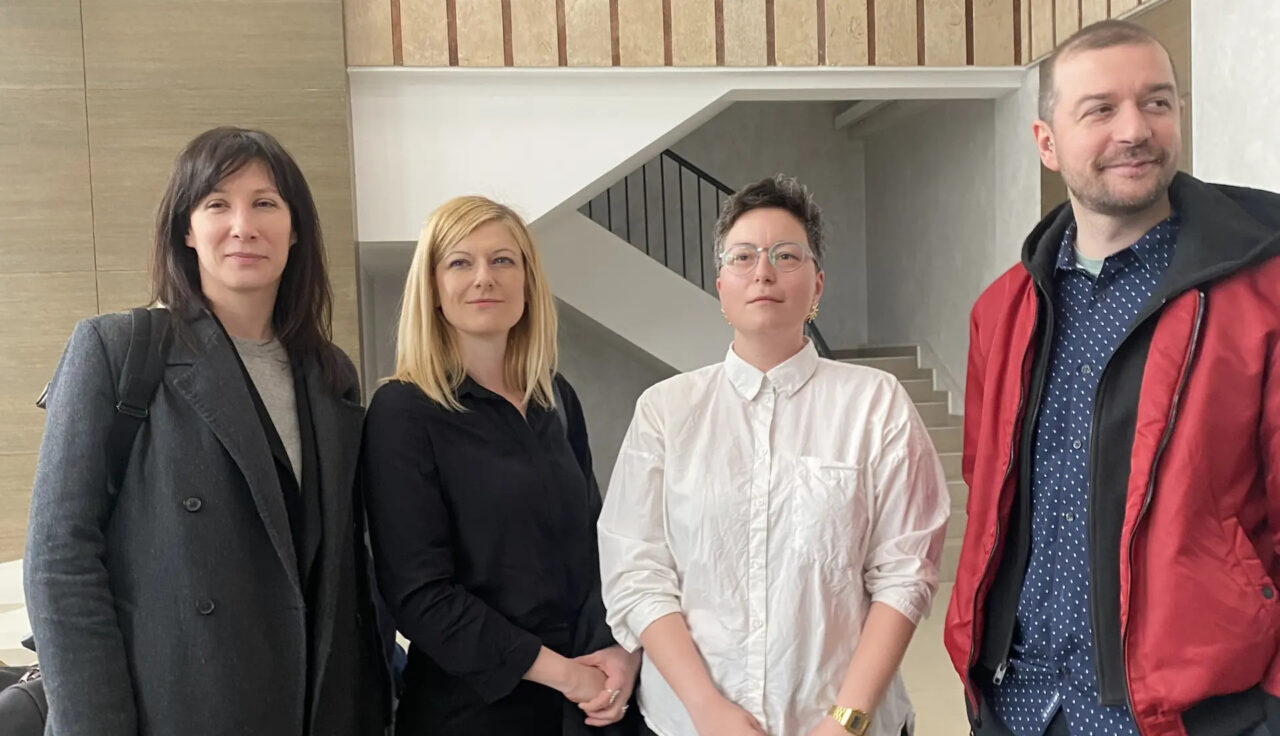
After filing the lawsuit against Dojčinović and Bojana Pavlović, lawyer Djordjević and Judge Djordjević, only a few months later, also filed a lawsuit against deputy editor-in-chief Bojana Jovanović and journalist Jelena Radivojević, with the same demands.
In total, therefore, the Djordjević couple are seeking approximately three years in prison for the journalists and eight years of bans on practicing journalism, while in the civil case they are seeking 700,000 dinars in damages.
This would be the most severe punishment imposed on female and male journalists since the so-called Šešelj Law of 1998, when several newsrooms were destroyed, culminating in the murder of journalist Slavko Ćuruvija, who was followed on the day of his assassination by 27 members of the State Security Service of Serbia’s Ministry of Internal Affairs.
The Djordjević couple are suing KRIK simply because the newsroom verified and accurately reported publicly available information about judges’ assets. Following the publication of the information in KRIK’s “Judge the Judges” database, neither the judge nor the lawyer disputed the data. Nor could they have done so, because the information about their assets is accurate.
It is important to point out that, at the time when Radomir Marković was head of the State Security Service — he was sentenced to 40 years in prison for involvement in the abduction and murder of former Serbian President Ivan Stambolić, the murder of four officials of the opposition Serbian Renewal Movement, and the attempted assassination of opposition leader Vuk Drašković in Budva — the current lawyer, Aleksandar Djordjević, was a senior official of the State Security Service, initially holding the rank of captain.
He was head of the Security Directorate and bodyguard to Mirjana Marković, the wife of President Slobodan Milošević, whom many believe wielded significant influence over the leadership of the State Security Service.
His wife, Judge Djordjević, who together with him is suing the KRIK newsroom, was a member of the Appeals Panel that unanimously acquitted the defendants who had been convicted at first instance of the murder of Slavko Ćuruvija. The Supreme Court of Serbia found that this acquittal violated the Code of Criminal Procedure in favor of the defendants.
According to the assessment of experts and members of the professional community, the lawsuit against KRIK is currently the largest and most significant SLAPP case in Europe in terms of the potential sentences and the number of journalists targeted, even though the plaintiff says they could have filed twice as many lawsuits.
Since the proceedings began, four hearings in the civil case and ten hearings in the criminal case have been held, along with two attempts at mediation.
I have attended almost all of the hearings, as have a number of fellow journalists and observers from international organizations and diplomatic missions in Serbia. It is clear to all of us how difficult the situation is for the journalists facing charges and for their defense team.
KRIK is a relatively small newsroom whose operations have been made more difficult, with its day-to-day work suffering when four editors and journalists have to devote their time to litigation.
Threats of imprisonment and bans on practicing journalism leave a mark not only on those being sued but also on other members of the newsroom. And that is precisely the purpose of SLAPP lawsuits — to prevent journalists from doing their work.
Over the next month, KRIK will face six hearings in proceedings with SLAPP elements, brought by very powerful politicians and businesspeople.
In addition to the two hearings involving the judge-and-lawyer Djordjević couple, KRIK has also been sued twice by Jelena Tanasković, the former acting director of Infrastruktura Železnice Srbije, with two hearings scheduled this month.
A hearing has also been scheduled in a lawsuit filed by Nikola Petrović, President Vučić’s godfather, in the retrial. There is also a lawsuit filed by Predrag Koluvija, who is on trial in proceedings in which he is accused of being the organizer of a criminal group that cultivated marijuana for sale.
The state and criminal establishment have turned against a newsroom employing no more than 15 female and male journalists. This has been the regular reality for this media outlet for the past 11 years.
It should also be recalled that, in addition to these drastic threats associated with lawsuits, KRIK’s journalists are regularly subjected to vilification and targeting by Serbia’s leading and most powerful politicians and its highest-circulation and most-watched tabloids.
The homes of three female journalists have been broken into; they are regularly followed, and their internal communications are constantly at risk of surveillance.
Such pressure also creates situations in which journalists can no longer withstand the pressure and leave the profession, require ongoing psychological support because of burnout, or leave the country because their security is at risk.
Financial penalties represent pressure on the newsroom’s very existence.
All of this can be seen through KRIK’s experience in this court case brought by the judge-and-lawyer Djordjević couple, as well as through several trials the newsroom is facing this month involving those accused in connection with the greatest tragedy, the “canopy collapse,” and a case involving Serbia’s most powerful “businessman” and the president’s godfather.
Lawyer Djordjević, a former bodyguard to Mirjana Marković, complained in court that after the publication of information about his assets and those of his wife, there had been nothing but negative comments. He said there had been “not a single nice comment.”
In the arrogance and brazen manner that has characterized the lawyer’s appearances — he was formerly head of the Security Directorate of the State Security Service when Radomir Marković was in charge of the institution, and Marković was sentenced to 40 years in prison and is serving that sentence — the plaintiff stated that, to his recollection, KRIK journalists had been informed by the administration of the Court of Appeal that they would be violating certain laws if they published publicly available information.
Defense attorney Kruna Savović objected to the plaintiff’s testimony, describing it as calculated to subject the four KRIK journalists to criminal prosecution.

The lawyer said that the case file contains a message sent by the plaintiff from a private email address, rather than an official response from the court administration.
This was followed by his apology and an acknowledgment that he might have been mistaken, and that he partly agreed with the defense attorney. But this detail also defined the entire proceeding: an attempt to stop KRIK and investigative journalism at all costs, through the appropriation of institutions and through falsehoods and the use of tabloids as evidence.
This court case strongly reminds me of one of the darkest periods for journalism in Serbia: when the Serbian Radical Party entered government, when the so-called Šešelj Law on Public Information was adopted, when Aleksandar Vučić vigorously enforced it, and when the police and secret service — the State Security Service — as well as the military, were massively abused.
All of this was done with the aim of eliminating freedoms — freedom of the media, political organization, democracy, and human rights.
It did not succeed then, and it will not succeed today. But it is extremely important that we resist this collectively, not only as journalists and media outlets, but also as civil society organizations, the student movement, and political parties.
We must not allow newsrooms such as KRIK to be systematically destroyed.
Concern for free media is, first and foremost, concern for our own freedom.
 Djordje Jokic