

A Drumhead Court for Veran Matić
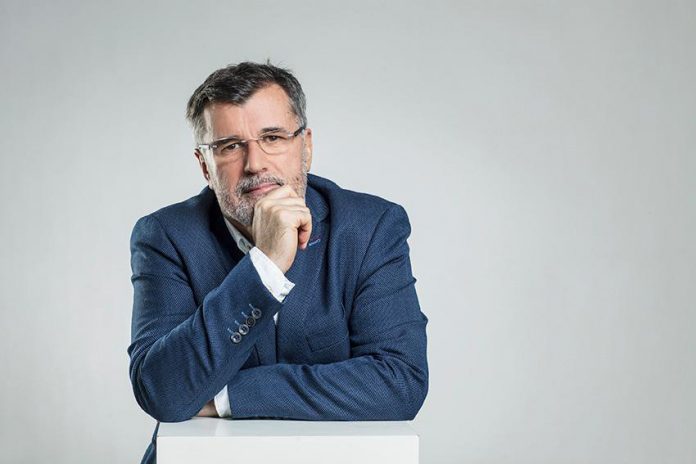
Autorka: Antonela Riha, Izvor: Cenzolovka
From the early 1990s to today, the same pattern persists: demonization, targeting, pressure, violence, and the use of media to incite hatred. The latest such pamphlet is the program “Evil Times 2”, produced by the Center for Social Stability. What viewers of national-frequency television stations, local broadcasters, and portals saw was the regime’s drumhead court verdict against Veran Matić for everything he has done over the past decades.
A similar “verdict” was once written in Politika by Miroslav Marković ahead of the murder of Slavko Ćuruvija, while Serbian citizens still remember the attack on Oliver Ivanović, broadcast on TV Pink. That unsigned piece disappeared from the internet after Ivanović was killed. The story against Veran can now be seen daily in pro-regime media outlets, with a continuation of the series already announced.
The Indictment
For those who did not watch: in 36 minutes of high-level production filled with archival footage from the 1990s to the present, narrators read a text accusing Veran of building his career as a “key figure of the Western factor” and thereby “undermining the reputation of the institutions of the Republic of Serbia and their positions on important national issues”.
His contacts with George Soros, Richard Holbrooke, U.S. senators, British diplomats, and USAID are described. In the tone of the harshest hate speech heard during the wars of the 1990s, the unknown author speaks of the “bloody traces of Matić’s work,” allegedly visible “from the destroyed houses of Knin Krajina, through the deserted villages of Serbian Bosnia, crucified Kosovo, all the way to the monument of Milica Rakić in Belgrade.”
He is accused of having “traded our holy sites” because he advocated for Serbian and Serbian Orthodox cultural heritage in Kosovo to be included in the Belgrade–Pristina dialogue and protected by UNESCO.
He is further accused of being the “main distributor” of foreign money and equipment used in the 1990s to establish the ANEM network of local radio and TV stations, allegedly aimed at limiting Serbia’s sovereignty. Without evidence, the program alleges theft and fraud.
All of this is presented as the “genesis of the occupation media platforms N1 and Nova S,” while Veran is also accused of being the “protective umbrella” for KRIK and Stevan Dojčinović, who allegedly lead attacks against President Aleksandar Vučić.
The anonymous author behind the Center for Social Stability accuses Veran of “hatred toward everything Serbian,” claiming he joined the “failed attempt to carry out a colored revolution” alongside Dinko Gruhonjić and Ana Lalić, who are regularly demonized in pro-regime media.
Production of Evil
By the time this text was written, more than 20 local media outlets across Serbia had broadcast the program and published largely identical accusations against Veran Matić. Clips from the program continue to air on TV Informer with accompanying commentary.
The Center for Social Stability, which produced the program, states on its website that it has existed since 2004, although the Business Registers Agency lists 2012 as its founding year. It became widely known in the summer of 2025 when it participated in organizing rallies supporting President Vučić, the so-called counter-blockades.
The Center’s director is Ognjen Karanović, and one of its associates is Minister for European Integration Nemanja Starović. Its spokesperson was Predrag Rajić, who has since advanced from adviser to Prime Minister Miloš Vučević to First State Secretary at the Ministry of Public Administration and Local Self-Government.
Some of the portals that published attacks on Veran are part of a network of ten new online media outlets owned by Zaple Media Group from Novi Sad, whose editor-in-chief, Gradimir Banković, collaborates with the Center.
Vučić publicly praised them as “true Serbian patriots,” while National Assembly Speaker Ana Brnabić described the Center as a “fantastic non-governmental organization.”
Campaign of Evil
After “Evil Times 2” aired simultaneously on B92, Prva, and Informer on January 29, local media across Serbia took over the campaign. The accusations were echoed by Srbija na istoku, Glas Aranđelovca, Lučani uživo, Palanačke vesti, Stara Pazova uživo, Nova Pazova uživo, RTV Pančevo, Novosadska TV, Alo portal, 24sedam.rs, Vojvodina uživo, NS uživo, Dnevnik, 025, Gradske info, Dunav televizija, RTV BAP, Sremske vesti, Drina info, Moja Bačka Topola, 024 info, and others.
More than 20 local outlets are now carrying the disputed program and accompanying texts targeting Veran Matić.
The Target
Veran Matić has been targeted by Radicals, Socialists, and their associates since the founding of Radio B92. In the 1990s, the station was openly anti-war, reported on tragedies across Yugoslavia, condemned crimes, and named perpetrators. It was consistently and clearly opposed to Slobodan Milošević’s regime, which impoverished Serbia, isolated it internationally, opened war fronts, and persecuted dissenters.
B92 journalists were repeatedly branded “foreign mercenaries,” “domestic traitors,” and “forces of chaos and madness.” The station was shut down multiple times, and Veran was detained on the first day of NATO bombing. As editor, he protected his journalists and served as a pillar of support for independent media.
In a statement to Insider, he suggested that the latest attacks may be linked to the government’s failure to form the REM Council and to his frequent discussions with international organizations about attacks on journalists and pressure on independent media.
For years, as a member of the Permanent Working Group for Journalists’ Safety, he has followed trials, traveled across Serbia where media face local pressure, written reports on threats and violence, and openly demanded state protection for endangered journalists.
The Record
After the political changes of 2000, the terror of Milošević’s rule faded from public memory. Only a handful of journalists gathered on anniversaries of the murders of Slavko Ćuruvija, Dada Vujasinović, and Milan Pantić. Even during Boris Tadić’s presidency, Veran advocated for journalists to unite and pressure police and prosecutors to complete investigations and bring killers to justice – without much support.
When the Serbian Progressive Party came to power, it sought favor with the EU and international community, and in 2013 supported the creation of the Commission for Investigating the Murders of Journalists. Vučić miscalculated if he believed Veran could be easily co-opted; he did not expect him to approach the task seriously and persistently.
The Commission’s results are reflected in the Ćuruvija trial outcome and in the fact that over the past decade the public has been continually reminded of the deep darkness of the 1990s, when many of the same figures now in power held office.
Veran Matić is an easy target. For decades, he has been criticized from various sides. He does the work others avoid, stands up for colleagues, endures contempt, tackles dangerous topics, and refuses to flatter in order to be liked.
The ongoing campaign against him may serve as preparation for attacks on other journalists not aligned with those in power. The media trial of Veran Matić so strongly resembles the 1990s that many journalists fear tragic repetitions. “How to Kill Veran Matić” is the title of a text by Veton Surroi that captures the sentiment of many colleagues.
Ana Martinoli, professor at the Faculty of Dramatic Arts and former B92 employee, wrote regarding the current attacks:
“I am writing this text so that the person we call first when we are threatened and attacked knows that he is not alone. That he too, when threatened and attacked, has someone he can call to stand in front of and beside him.”
#IStandWithVeran
Tekst je prenet sa potala Cenzolovka.
 Djordje Jokic