

Whom does the person we all call turn to when he himself is threatened and attacked?
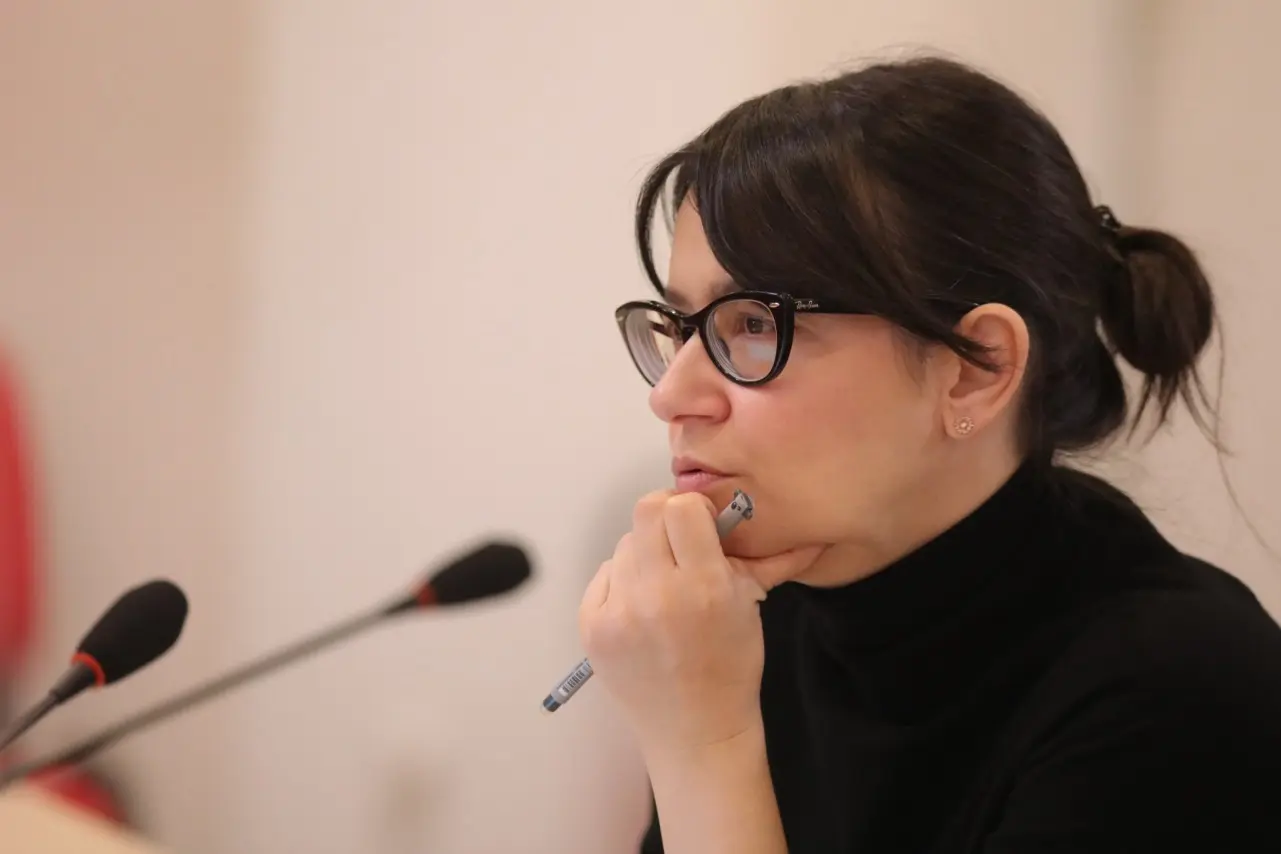
Author: Ana Martinoli, The source: Radar
Whom does the person we all call turn to when he himself is threatened and attacked?
I have been thinking about this a lot lately, watching the terrifying campaign of targeting Veran Matić on pro-regime platforms. Because Veran is the first person most of us who work (not only) in the media call when our names appear in tabloid outlets, as part of an incessant, shameless, uncompromising witch hunt against every critical thought, dissonant voice, and form of resistance.
The current campaign against Veran is not only personally disturbing—it is socially dangerous. Targeting is not criticism. Targeting is a method. Its purpose is to send a message: “If we can do this to him, we can do it to anyone.” The message is that no one is safe, there is no security, anyone can become a “target.” That is why it is important that we stand with Veran now and clearly name what is happening to him, before it becomes normalized and buried.
I worked at Radio B92 for eighteen years. It was a period of my life during which my professional reflexes, ethical coordinates, and sense of responsibility toward truth, justice, and civil society were embedded in the way I think, work, and speak. And they have remained there permanently. The person most responsible for this is my editor and director at Radio B92, Veran Matić. That is why I feel the need to write something personal—something I hope will reflect the thoughts and sentiments of many journalists, media workers, local media outlets, and civil society organizations. I want to stand with the man who stood for three decades on the side of truth, justice, and the fight against war, hatred, and destruction—when doing so was the hardest and most dangerous.
Veran’s work is difficult to capture within a standard biography. But all of his professional and social activities, both visible and invisible to the public, reveal the key value of his work: continuity. From the founding of Radio B92 in 1989, through wars, repression, bans, political upheavals, and technological changes, the core line of his work has remained the same—media freedom, freedom of expression, and the safety of journalists are not negotiable categories. Radio B92 was not just a newsroom. It was a school of professionalism and journalistic ethics in conditions where those very values often meant personal risk. Working with Veran taught me that editorial responsibility is not measured by grand words, but by daily, difficult decisions: what to publish, how to protect a source, how to protect a reporter, how to respond to pressure, threats, or “messages”. From the very beginning, Veran understood that media freedom is not a romantic idea or an unattainable ideal, but the creation of solid infrastructure—human, technical, organizational, production, and value-based. Media freedom is, in fact, a complex system of procedures, standards, mutual solidarity, steadfastness, perseverance, and care. This is often invisible from the outside. But it becomes painfully clear when it disappears.
The 1990s were a period when Radio B92 was banned and silenced—but never muted. Just like Veran himself. He was detained, interrogated, arrested, but he never gave up. Even when the radio station was taken off the air, the voice found its way—through the internet, through international networks of solidarity, through people who believed that the public had the right to know. Most of these efforts were the result of Veran’s vision and his ability to think several steps ahead, as well as the collective work of all collaborators, from news to music and culture. Everyone had the freedom and space to think progressively, to experiment, and to create new opportunities in which the voice and values of Radio B92 could be louder and reach further.
Veran created a safe space for us to fight, think, and speak loudly. The experience of constant endangerment—physical and professional—did not produce cynicism or bitterness, but a heightened sense of responsibility. It instilled in us the awareness that media freedom is never permanently won and must be defended again and again, especially in Serbia—past and present. And that there are always many ways to do so.
Veran’s work was never confined to a single newsroom. His engagement in protecting journalists, fighting impunity for attacks and murders, and building institutional mechanisms of support for the profession has lasted for decades. The establishment of the Commission for the Investigation of Murders of Journalists was one of the most important and most difficult steps in that direction. It is precisely this Commission that has become one of the main targets of attacks on Veran—of discrediting, belittlement, and denial. The criticisms are always the same: that the institutional framework of the Commission automatically invalidates its purpose. But the question is only one: was there anyone else prepared for such engagement, who defended journalists more consistently, courageously, and uncompromisingly, and who understood the daily problems, obstacles, and challenges journalists face in Serbia under Aleksandar Vučić—not theoretically or declaratively, but through concrete support and assistance? Someone prepared for persistence, pressure, conflict, constant challenge, and personal exposure.
For critics, the Commission was an act of political loyalty. For me, it was a courageous attempt to break through the wall of silence and impunity that had surrounded the murders of journalists for decades. This could never have been an easy or “clean” job. It meant entering the hardest structures of the system, with full awareness of its limitations, obstructions, and risks. Criticism of that attempt is a legitimate topic for debate. But disqualifying a man who has insisted on truth, justice, and journalists’ safety for decades is not. For more than thirty years, Veran has built networks of professional solidarity: through journalists’ associations, through mechanisms for reporting threats and ensuring immediate response, through direct communication with newsrooms and individuals under pressure, through meetings with authorities, pressure on institutions, and guaranteeing safety through personal contacts with the police when systemic mechanisms failed.
All of this enabled something simple but crucial: when a journalist receives a threat, when their address is published, when they become a target, they are not alone. There is someone who understands the context, someone who knows how the system works, someone ready to stand in front of them or beside them.
Over the past decades, Veran has shown that protecting journalists, to be effective, cannot be a theoretical exercise, but must be a daily, arduous, often invisible practice.
I am not writing this text to idealize Veran Matić. I am writing it because I know how to distinguish criticism from lynching, dialogue from a witch hunt, public accountability from organized endangerment. I am writing it because I know how many times in this country silence has been more costly than speech.
My support for Veran today is support for a simple, fundamental, yet fatally endangered idea: that a journalist must never be prey, that an editor must never be a target, and that journalists’ safety is not a privilege, but the minimum standard of any society that calls itself democratic.
That is why I am writing this now—not out of nostalgia, but out of professional and human conviction. The attacks on Veran Matić, so brutal and unscrupulous, are not merely an attack on one man. They are an attack on the very idea that journalism in Serbia has the right to be free, responsible, and protected.
Finally, I am writing this so that the person we all call first when we are threatened and attacked knows that he is not alone—that when he himself is threatened and attacked, he too has someone to call who will stand in front of him and beside him.
The text was taken from the portal Radar.
 Djordje Jokic